
Key Takeaways
- Designing a custom outdoor living space works best when it’s planned alongside the home, not added after the fact.
- A well-planned outdoor space includes a patio or deck, a shade structure, and at least one focal feature, such as a kitchen, pool, or fireplace.
- In 2026, top design trends favor indoor-outdoor continuity, multi-functional zoning, smart technology, and low-maintenance materials.
- St. Louis’s variable climate makes covered patios and durable material choices especially important for year-round use.
- Outdoor kitchens and covered patios consistently rank among the highest-value additions to a luxury custom home.
- REA Homes integrates outdoor living into the custom home design process from day one, so every element connects to the overall vision.
Most homeowners think about their backyard after the house is built. But when you’re designing a custom home, that’s a missed opportunity. Your outdoor space can be planned from the first sketch, so that the sightlines, connection points, materials, and features all work together rather than fighting each other.
In a survey of outdoor design professionals, 78% identified seamless indoor-outdoor transitions as the defining trend of the current era of residential design. That level of integration is only possible when outdoor living is part of the conversation at the start of a custom home build.
This guide walks through how to approach outdoor living as part of a custom home design, from the features worth including to the trends worth knowing to how the right builder makes all the difference.
Why Outdoor Living Belongs in the Custom Home Design Process
When outdoor spaces are designed alongside the home, rather than retrofitted later, the result is a space that fits. The patio flows from the great room. The pool aligns with the primary suite view. The outdoor kitchen is positioned where the grilling smoke won’t drift into an open window.
Getting that right requires decisions made early, specifically:
- Where the home’s glass doors and windows face, and what they look out to
- How exterior grade and elevation affect the usability of the backyard
- Where electrical, gas, and plumbing rough-ins for outdoor features need to go
- How the exterior architecture of the home informs the aesthetic of the outdoor space
Waiting until after construction to figure these things out means higher costs, more compromises, and a yard that never quite fits the house.
What to Include When You Design an Outdoor Living Space
The right mix of features depends on how your family lives, how often you entertain, and how much upkeep you want to manage. That said, most well-rounded custom outdoor living spaces in St. Louis share a similar foundation.
Covered Patio or Deck
A covered patio or deck gives you the foundation everything else builds around. Covered patios are the most popular outdoor living area type, favored by 44% of design experts, largely because they extend usability across seasons. In St. Louis, where summers are humid and springs are unpredictable, a covered structure means the space works in both June and September.
Material choices matter here. Composite decking, natural stone, and porcelain pavers each have different aesthetics, price points, and maintenance demands. The goal is continuity with the home’s exterior, so the finishes read as connected rather than mismatched.
Outdoor Kitchen
An outdoor kitchen has become one of the most sought-after features in luxury custom home design. A well-equipped setup typically includes:
- Built-in grill and side burners
- Refrigerator and sink for prep and clean-up
- Dedicated prep counter space
- Optional pizza oven or smoker for a custom focal feature
According to the National Association of Realtors, outdoor kitchens deliver 100% cost recovery and consistently top the list of features luxury buyers look for. More than that, they anchor the outdoor space and provide guests with a natural place to gather.
Pool or Water Feature
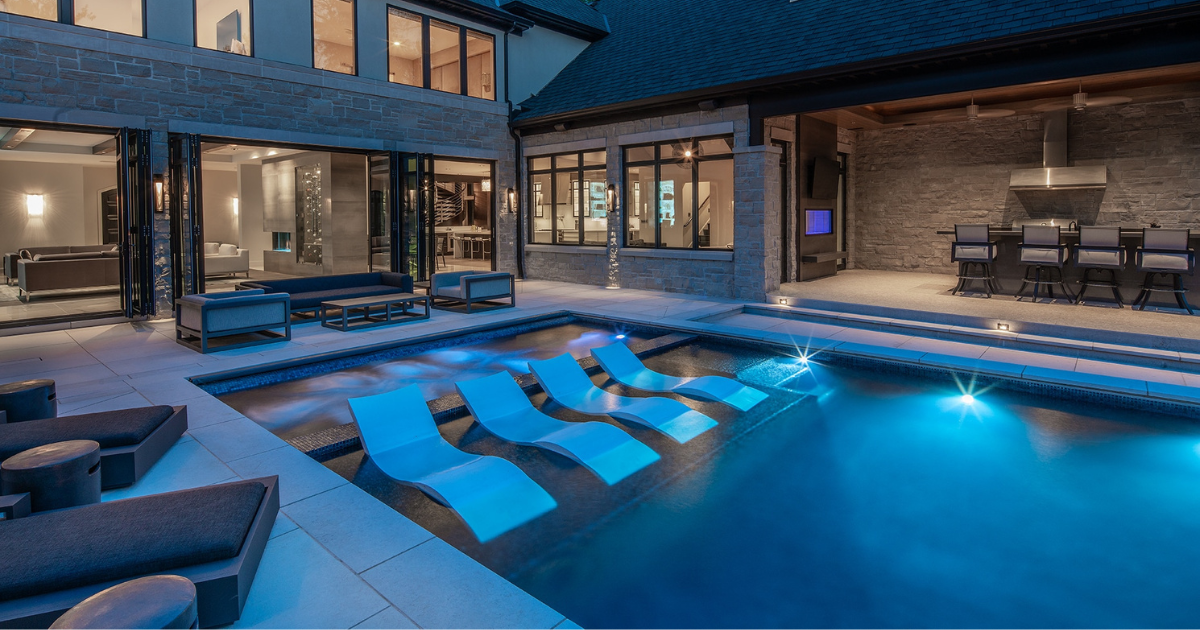
A custom pool transforms a standard backyard into a private retreat. Design decisions, including shape, tanning ledge placement, spa integration, and coping material, should tie back to the home’s architecture and the yard’s overall layout.
For smaller lots or homeowners who want ambiance without the space commitment, water features like spillways, fountains, and reflection pools add movement and a sense of calm without requiring a full pool installation.
Fire Features
St. Louis springs and falls are ideal for outdoor entertaining, and a fire feature extends those seasons considerably. Options include:
- Built-in gas or wood-burning fireplace that anchors a seating area
- Freestanding or built-in fire pit for a more casual layout
- Fire table integrated into an outdoor dining zone
A well-placed fireplace becomes the centerpiece of the outdoor space and gives guests a reason to stay outside long after the sun goes down.
Shade Structures and Pergolas
A pergola or shade structure does more than block the sun. It creates a defined outdoor “room” and provides the overhead framework for integrating ceiling fans, speakers, recessed lighting, and weatherproof technology. When designed to complement the home’s architectural language, it ties the whole space together.
For those thinking about how outdoor spaces connect to the broader custom home, these features are worth flagging before plans are finalized, as adding them after construction is almost always more expensive.
2026 Outdoor Living Design Trends to Know
Design in 2026 is pushing strongly in a few directions that are especially relevant for custom home builds.
Indoor-Outdoor Continuity
According to a 2025 survey of design professionals, indoor-outdoor coherent design is the top trend among experts, with 56% identifying it as the dominant direction for the year. In a custom home, this means aligning flooring tones, matching architectural language between inside and out, and using large sliding or folding glass door systems to blur the boundary between the two.
Multi-Functional Zoning
Today’s outdoor spaces are expected to serve multiple purposes depending on the occasion. A patio that hosts morning coffee, afternoon play, and evening dinner parties requires intentional zoning, including:
- A dining zone separate from the lounge area
- A cooking zone that doesn’t crowd the seating
- A recreation zone that gives kids space without taking over the entertaining area
This kind of layout requires planning. It doesn’t happen naturally from a patio slab and some furniture.
Smart Outdoor Technology
Integrated lighting systems, outdoor speakers, weatherproof TVs, and automated shade screens are becoming standard in high-end custom outdoor builds. These features add convenience and elevate the experience without requiring manual adjustment every time the space is used.
Low-Maintenance Materials
According to Houzz’s 2024 U.S. Outdoor Living Trends Survey, extending living space and reducing maintenance are among the primary motivators for homeowners investing in outdoor upgrades. Porcelain pavers, aluminum pergola systems, and composite decking check both boxes. They hold up well through Missouri’s variable climate without demanding significant upkeep.
How REA Homes Approaches Outdoor Living in a Custom Build
Most builders treat the backyard as a separate project, something handled after the home is done. REA Homes does it differently.
Our team incorporates outdoor living into the custom home design process from the beginning. That means the outdoor space is considered when the floor plan is drawn, when windows and door placement are determined, and when exterior grade and drainage are planned. The result is a yard that connects to the home, not one that happens to sit behind it.
We work with trusted design partners and trade specialists to bring every element together, from covered patio structures to pool design to outdoor kitchen builds. Every detail is considered in relation to your home’s architecture, your property’s layout, and how your family actually lives and entertains.
Whether you’re in the early stages of planning a custom home in St. Louis or ready to start building, outdoor living is a conversation worth having at the very beginning.
Contact REA Homes today to start designing a custom home where the backyard is built into the vision from day one.
FAQs: How to Design an Outdoor Living Space with a Custom Home
When in the custom home design process should I think about outdoor living?
As early as possible. Outdoor living features like pools, outdoor kitchens, and covered patios require decisions that affect rough-ins, grading, window placement, and door locations, all of which are determined before construction begins. Bringing them up after plans are finalized usually results in added costs and design compromises.
What outdoor features add the most value to a custom home in St. Louis?
Covered patios, outdoor kitchens, and pools consistently rank among the highest-value additions in the luxury custom home market. Covered patios extend year-round usability, outdoor kitchens deliver strong cost recovery at resale, and pools transform the backyard into a private retreat that buyers in the St. Louis luxury market look for.
What materials hold up best in St. Louis’s climate?
St. Louis experiences hot, humid summers, cold winters, and variable spring and fall weather. Porcelain pavers, composite decking, and stamped concrete are all durable choices that perform well across seasonal extremes and require minimal upkeep compared to natural wood or standard concrete.
How do I design an outdoor living space that connects to my home’s interior?
The connection starts with architectural decisions. Window and door placement, floor elevation, and matching material tones between inside and out all contribute to a seamless indoor-outdoor flow. Large sliding or folding glass door systems are among the most effective ways to open the interior to outdoor space. These choices are easiest to make before construction begins.
What’s the difference between having an outdoor living space designed with the home vs. added later?
When outdoor living is part of the original design, everything integrates. Plumbing, gas, and electrical rough-ins are in the right places. The exterior architecture speaks to the outdoor space. Grades and drainage are planned to support the backyard layout. Adding a patio or outdoor kitchen after the fact means working around what’s already been built, which almost always increases cost and limits design options