
Key Takeaways
- Custom home cost in St. Louis is driven more than anything by four variables: the lot, the size and complexity of the design, the finish level, and the condition of the existing structure if you are renovating.
- Cost per square foot to build a house is a comparison tool, not a budget. It compresses dozens of decisions into one number and hides the ones that matter most.
- Home renovation cost in St. Louis depends far more on scope than on square footage. Cosmetic work and structural work occupy entirely different budget tiers.
- Whole-home renovation cost typically exceeds what homeowners expect because the systems behind the drywall often need to be brought current alongside the visible work.
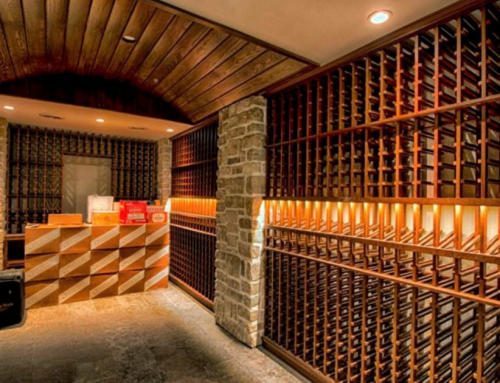
- Luxury amenities such as wine cellars, home theaters, and golf simulators cost significantly less when they are designed in from the start rather than added later.
- Any published figure, including the ranges in this guide, is a planning reference. Final cost depends on your scope, your site, and your finish selections.
Ask three builders what a custom home costs and you will get three answers, all of them honest and none of them useful until someone looks at your lot and your plans. That gap between what homeowners want to know and what a builder can responsibly say before design is where most cost confusion lives. This guide closes it by explaining what actually moves the number.
In this post, you’ll learn:
- Which variables move a custom build budget the most, and which ones barely register
- How renovation scope changes the math, from a single kitchen to a whole home
- What cost per square foot genuinely tells you and where it misleads
- How luxury amenities affect a budget depending on when they enter the plan
- How to decide between building custom and renovating what you already own
What Drives Custom Home Cost in St. Louis
Two homes of identical square footage on the same street can differ by hundreds of thousands of dollars. The difference is almost never the square footage.
The Lot and Site Conditions
Land is the first variable and the least predictable. Two parcels in the same neighborhood can carry very different site costs depending on what is under and around them.
- Grade and topography. Sloped lots require retaining, additional excavation, and often a more complex foundation design.
- Soil conditions. St. Louis County clay is common and can require engineered footings or additional drainage work.
- Tree preservation. Mature trees are part of the appeal in Ladue and Frontenac, and protecting them constrains staging and access.
- Utility access. A lot without existing sewer, water, or gas at the street adds real cost before framing begins.
- Teardown vs. vacant. Demolition, abatement, and disposal on an infill lot are line items a vacant parcel does not carry.
Worth noting: the NAHB survey found that finished lot costs fell to 13.7 percent of a new home’s sales price, down from 17.8 percent two years earlier and the lowest share in the survey’s history. Homeowners often anchor to land price when the build itself makes up a larger share of the equation.
Size, Design Complexity, and Finish Level
After the lot, three factors do most of the work.
- Size, but not linearly. Kitchens and baths cost the most per square foot and don’t scale down proportionally, so cost per square foot often drops slightly as a home grows, even as total dollars climb.
- Complexity. Rooflines, ceiling treatments, curved walls, steel spans, and window scale all add engineering and labor that a rectangle does not require.
- Finish level. Interior finishes are the single largest construction cost category nationally, and in a luxury build they are also the widest-ranging. Cabinetry, stone, tile, millwork, lighting, and hardware can swing a budget by a factor of three without changing a single wall.
What Drives Home Renovation Cost in St. Louis
Home renovation cost follows different rules than new construction, because you are working inside constraints someone else set decades ago.
Cosmetic Scope vs. Structural Scope
The single biggest budget line is whether the project touches structure and systems.
- Cosmetic: finishes, fixtures, paint, cabinetry, and flooring within the existing footprint and layout.
- Systems: electrical service, plumbing supply and waste, HVAC design and ductwork, insulation, and air sealing.
- Structural: removing bearing walls, altering rooflines, adding a level, or changing the foundation.
Homes in the established 270 corridor communities REA Homes serves most often, including Frontenac, Des Peres, Kirkwood, and Town & Country, frequently date to the mid-twentieth century. Their bones are often excellent, but their systems often aren’t. That is where the cost to remodel a house diverges sharply from a homeowner’s first estimate.
Kitchen and Bath vs. Whole Home Renovation
Scope determines tier. A kitchen remodel cost stays contained when the layout holds and expands quickly when plumbing and structure move. A whole home renovation cost is a different category entirely, because it usually means bringing every system current at once.
Demand context matters here too. The Harvard Joint Center for Housing Studies projects homeowner spending on improvements and repairs will reach $523 billion in early 2027, with year-over-year growth of just 0.5 percent. Spending remains at historically high levels even as growth flattens, which means qualified trade partners in the St. Louis luxury market stay booked.
How Luxury Home Pricing Works in St. Louis
Most cost guides answer the wrong question. They report what an average project costs somewhere in the country, then leave a homeowner in Ladue or Town & Country to guess how far above that number their own project sits. The honest answer is that it sits well above, and the more useful answer is that the figure only becomes real once the plans and selections are in place.
REA Homes builds a budget the same way it builds a home: from detailed architectural drawings and specific showroom selections, not from allowances. An allowance is a placeholder, a number inserted for cabinetry or stone or lighting before anyone has chosen them. Allowances are where luxury budgets go wrong, because the placeholder is almost always lower than the selection a luxury homeowner actually wants. Pricing from real drawings and real selections takes more effort up front and produces a number the homeowner can trust through construction.
The brackets below are planning references for the tier REA serves. They are not quotes, and they assume the finish level, fully custom cabinetry, and natural stone that clients in these communities expect rather than builder-grade equivalents.
| Project type | What drives the spread | Luxury planning range |
|---|---|---|
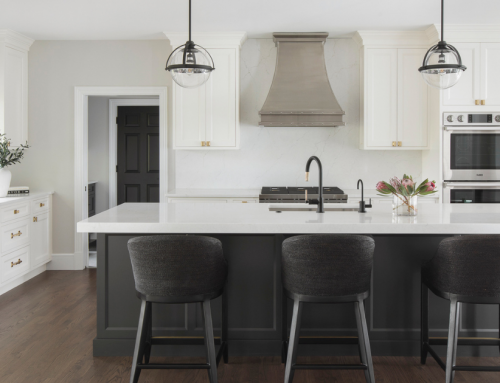
| Kitchen renovation | Layout changes, fully custom cabinetry, professional appliance package, natural stone | Mid five figures to low six figures |
| Primary suite or bath renovation | Plumbing relocation, tile and stone scope, custom millwork | Mid five figures and up |
| Home addition | Foundation, roof tie-in, systems capacity, matching existing finishes | Low to mid six figures |
| Whole home renovation | Full systems replacement, structural changes, luxury finish level throughout | Mid six figures and up |
| New custom home, construction only | Lot conditions, size, complexity, finish level | Well above national per-square-foot norms |
Important: Final cost depends entirely on scope, site conditions, and finish selections. REA Homes does not quote a price before understanding a project, and you should not treat any published range as a commitment.
Cost Per Square Foot to Build a House: Why It Misleads in the Luxury Market
Cost per square foot to build a house is the first number homeowners ask for and the one that helps least; in the luxury market, it is close to meaningless. A per-square-foot figure is a national average stretched across every quality level from builder-grade to fully custom. NAHB’s latest cost of construction survey put that national baseline at $162 per square foot, and luxury construction in St. Louis sits far enough above it that using the figure as a budget anchor almost guarantees a homeowner plans for the wrong project.
The number also hides the decisions that define a luxury home. A single cost-per-square-foot figure says nothing about:
- Whether it includes land, site work, permits, design fees, or contingency
- The finish level it assumes, which is the single widest-ranging cost in a luxury build
- What a specific lot in Frontenac or Warson Woods will require before construction starts
- What a builder’s overhead, warranty, and project management are worth
Two builders can quote the same cost per square foot and deliver very different homes. In the luxury tier the gap is wider still, because the millwork, stone, and behind-the-wall systems that separate a good home from an exceptional one never show up in one blended number.
This is why REA Homes prices from plans and selections rather than a multiplier. A real budget starts with drawings the homeowner has approved and products they have chosen in a showroom, which turns a guess into a figure that holds.
Luxury Amenity Add-Ons and What They Do to a Budget
Wine cellars, home theaters, golf simulators, and indoor sport courts are among the most requested features in St. Louis luxury homes. Their cost depends less on the amenity than on the timing.
- Wine cellars require dedicated cooling, vapor barriers, insulation, and often structural support for racking. Designed in at framing, the infrastructure is straightforward. Retrofitted, it usually means opening walls and rerouting mechanicals.
- Home theaters need acoustic isolation, dedicated circuits, and conduit runs. Wiring during rough-in costs a fraction of retrofitting later.
- Golf simulators demand ceiling height, span, and lighting control that are far cheaper to design in than to create after the fact.
- Indoor sport courts and fitness rooms carry structural, HVAC, and flooring requirements tied directly to the shell.
The pattern is consistent: infrastructure is inexpensive during construction and expensive afterward. Amenities named during design cost meaningfully less than the same amenities added in year three.
Custom Build vs. Renovation: Choosing the Path That Fits Your Goals
The right answer depends on what you are optimizing for.
Renovation makes sense when the location is irreplaceable, the structure is sound, and the changes you want fit within or near the existing footprint.
Building custom makes sense when the layout fundamentally does not work, when systems and structure would need replacing anyway, or when the lot supports something the current home never will.
The comparison deserves more room than one section allows, and REA Homes covers it in depth in a full guide to deciding between building new and remodeling in St. Louis.
Why St. Louis Homeowners Bring Cost Questions to REA Homes
Cost clarity comes from experience with a market’s specific conditions, not a national calculator.
- Decades of building and renovating in Ladue, Frontenac, Clayton, Town & Country, Warson Woods, Des Peres, Creve Coeur, Wildwood, and Kirkwood
- Long-standing relationships with the trade partners who do this level of work in St. Louis
- A design and construction process that surfaces cost implications during planning, not after
- A High Performance Luxury Homes℠ approach that treats systems, insulation, and air quality as part of the build rather than an upgrade
As founder Jeff Bogard puts it, the elements that shape comfort and efficiency most are the ones you never see behind the drywall. Those choices are also among the least visible in a cost-per-square-foot figure, which is exactly why a real conversation beats a published number.
Request a personalized cost estimate from REA Homes and get a range built around your lot, your scope, and your finish level rather than a national average.
FAQs: Custom Home and Renovation Costs in St. Louis
How much does a custom home cost in St. Louis?
Custom home cost in St. Louis varies widely based on lot conditions, home size, design complexity, and finish level. Luxury custom builds in communities like Ladue and Town & Country typically exceed national per-square-foot averages, which NAHB placed at roughly $162 for a typical single-family home excluding land. A builder can provide a meaningful range once the lot and preliminary design are known.
Is renovating cheaper than building new?
Sometimes, but not reliably. Renovation is usually more economical when the structure is sound, and the changes stay near the existing footprint. Once a project requires replacing systems, altering structure, or gutting to the studs, whole-home renovation costs can approach or exceed new construction while leaving you with existing constraints.
How much does it cost to renovate a house in St. Louis?
Home renovation cost in St. Louis depends primarily on scope. A finish-level update within an existing layout falls into a very different tier than a project that relocates plumbing, replaces electrical service, and opens the structure. Homes built before 1980 often reveal system upgrades during demolition that weren’t visible during planning.
How much does it cost to gut renovate a house?
A gut renovation means taking the home to its structural shell and rebuilding systems and finishes from there. Costs land well above a cosmetic remodel because they include demolition and disposal, new mechanical, electrical, and plumbing, insulation and air sealing, and complete interior finishes. It also carries the highest likelihood of uncovering conditions that weren’t visible beforehand.
What is a realistic cost per square foot to build a house in St. Louis?
There is no single reliable figure because cost per square foot depends on what the number includes. Before comparing two builders’ figures, confirm whether each includes land, site work, permits, design fees, allowances, and contingency. Two identical numbers can describe very different homes.